Menu

Beedie School of Business News

Opportunity Fest 2012

Opportunity Fest 2012

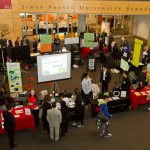
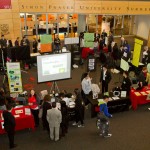
The Beedie School of Business at Simon Fraser University will next week host the third annual Opportunity Fest, a marketplace-style showcase of student creativity aimed at seizing new opportunities and addressing perceived challenges through entrepreneurship and innovation.

Opportunity Fest 2013 will be held from 6 to 9pm on Tuesday, March 26 at the mezzanine of the SFU Surrey campus. The event is open to all, with current and prospective students from all faculties, university personnel and other community members encouraged to come and see what the next generation of entrepreneurs has in store.

Building on the success of last year’s event, around 150 Beedie undergraduate students from the Entrepreneurship and Innovation concentration will present their class-produced projects and ventures through trade-show exhibits. The student ventures build on opportunities in areas such as video-hosting, online Chinese literature and products made from reclaimed wood. Keep reading…

Tags: , , , , , , , , , , , , , ,


Beedie School of Business Professor Eric Gedajlovic teaches students from Citadel Middle School in Coquitlam about entrepreneurship.

A group of middle school students engaged with leading business professors from the Beedie School of Business this week to showcase some innovative new products – made entirely from duct tape, paper clips and popsicle sticks.

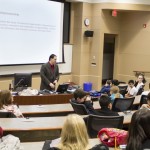
The students – from Citadel Middle School in Coquitlam’s Middle Age Cluster Class program – visited SFU’s Segal Graduate School in downtown Vancouver to pitch their creations to a panel of guest judges, including Beedie professor Eric Gedajlovic and Andrew Gemino, Beedie School Associate Dean of Undergraduate Programs.

The project was inspired by an assignment Gedajlovic set for the SFU MBA students earlier this year. Citadel Middle School teachers Marcia McInnes and Tara Elie set the students the task, which also required them to be aware of production costs, pricing structures and profit margins, as well as decide upon a charity to which they would donate a percentage of their profits. Keep reading…

Tags: , , , , , , , ,


The winning team, Blue Motion Tech. From left to right: Kartik Manghnani, Rachelle Hay, Ashley Burgess and Lindsay McIvor.

Students from the MBA program at Simon Fraser University’s Beedie School of Business last week demonstrated their social entrepreneurship business plans at the Opportunity Fest Fair.

The exhibition, held in the atrium of the Harbour Centre towers on Wednesday, 18 July, was part of Beedie Professor Eric Gedajlovic’s MBA Entrepreneurship class. Students were split into groups and tasked with creating their own business plans before presenting to a panel of judges consisting of members of the local business community.

The judges were armed with so-called “Beedie Bucks” – hypothetical dollars which they could allocate to the teams with the best ideas. After much deliberation, the top three teams were presented with specially-made gold, silver and bronze beedie medals.

The winning team, Blue Motion Tech, comprised of students Rachelle Hay, Ashley Burgess, Lindsay McIvor and Kartik Manghnani presented the “Healthy Handle” – a motion activated door handle which allows the public to exit the washroom without touching anything, whereby reducing the risk of communicable disease being passed on by people who fail to wash their hands.  Keep reading…

Tags: , , , , , , , , , ,


The winning team visiting one of the local businesses. From left to right: Pawel Herra, James Yang, Ashley Burgess, Rajlakshmi Mital and Mohammad Habbal

Students from the MBA program at Simon Fraser University’s Beedie School of Business have been pounding the pavement in an effort to bolster business prospects in the Heritage District of downtown Vancouver during evenings and weekends – when thousands of area office workers have gone home. The district – the historic commerce and banking area of Vancouver’s West Hastings Street – is a dynamic area for retailing and includes some world-renowned brands in addition to numerous small- and medium-sized businesses. The emergence of the area has translated into an unprecedented opportunity for area development, marketing and promotion.

To this end, the first ever MBA Opportunity Quest saw SFU’s graduate students engaging with local businesses in the core West Hastings Street area in order to help local merchants create strategies to bring the area to life when the weekday traffic starts to dwindle.

The event was pioneered by Professor Eric Gedajlovic through a partnership with the Downtown Vancouver Business Improvement Association (DVBIA). Before hitting the streets, the students were briefed by Gedajlovic and Ivy Fong, Member Services and Projects Officer, DVBIA, on the problems facing the area and what their expectations of the students were. The cohort of 52 students was split into 12 uniformed teams before being unleashed onto both West Hastings and Pender Street between Richards and Thurlow on the morning of May 23. Keep reading…

Tags: , , , , , , , , , , , ,


The Beedie School of Business at Simon Fraser University is hosting some of the world’s foremost experts in the areas of entrepreneurship and social capital at the Segal Graduate School in downtown Vancouver this week at a special academic conference.

Entitled Social Capital and Entrepreneurship: Catalyst or Retardant?, the two-day event takes place on April 20 and 21, bringing together outstanding international and Canadian scholars. They will workshop a series of interdisciplinary, peer-reviewed manuscripts on the relationship between various form of social capital and entrepreneurial activity in commercial, social and cultural contexts.

Social capital represents the value that is embedded in relationships among people and networks. “This is a topic that is of interest to practitioners and scholars in the fields of entrepreneurship, organizational theory, and many of the social sciences,” said Beedie School of Business Professor and event chair Eric Gedajlovic. “This week’s conference highlights the impact the Beedie School has made in this area in terms of both research publication but also collaboration with other business schools globally.”

Topics covered will include access to financial resources in entrepreneurial settings, entrepreneurial and alliance networks, and social capital in the context of start-ups as well as institutional development.

Working papers to be presented have been selected through a highly competitive review process by reviewers and editors of Entrepreneurship Theory and Practice (ET&P), one of the leading academic journals in the field of entrepreneurship.

The Beedie School of Business acknowledges the support of the Social Sciences and Humanities Research Council for their funding in support of this conference.

Contact:
Prof. Eric Gedajlovic
eric_gedajlovic@sfu.ca

Tags: , , , ,


A hot tub water care system, an employee wellness solution for companies and a sustainable recycling initiative aimed at helping Vancouver achieve its goal of zero waste for 2020 were the big winners at a Beedie School of Business social entrepreneurship competition.

Opportunity Fest 2012 gave SFU business undergrads the opportunity to showcase their class-produced ventures to judges from industry, academia and the wider business community. Held at SFU’s Surrey campus on April 11, the event featured three venture categories: commercial, social and sustainable, with the winners of each category awarded $1000.

In the commercial category the winning venture was “Team CMS”, who impressed judges with their Easy Care Water Solutions unit. Their electronic hand-held device simultaneously measures for all required levels to maintain water chemistry balance in hot tubs at a far cheaper price than similar units.

The social category was won by Team “Smart Fit”, who designed a wristband which measures heart rate and sleeping patterns and utilizes Bluetooth to update an online support and tracking platform. The technology allows employers to view benefits more reliably than traditional office wellness programs.

The sustainable category saw Team “Second Chance” take the top prize for their supplies material donation system. Through their system, the team collected over 30 broken or forgotten umbrellas and 50 rice bags from SFU students, restaurants and other businesses in the lower mainland. They then used these materials to create environmentally-friendly, handmade backpacks. Keep reading…

Tags: , , , , , ,


An upcoming event at Simon Fraser University Surrey and hosted by the Beedie School of Business will enable entrepreneurially-minded students to present their venture ideas to industry experts.

The second annual Opportunity Fest will be held on Wednesday April 11 from 6pm to 9pm in the Mezzanine of SFU’s Surrey Campus. Building on the success of last year’s event, over 100 students from seven different Beedie School of Business classes will participate in the marketplace-style exhibition, with three venture categories of commercial, sustainable and social ventures.

Students will present their class-produced ventures through trade-show exhibits that include product prototypes, videos, graphical display boards and more. Judges from industry, academia and the wider business community will evaluate the student ventures and express their financial interest or commitment through investment of emulated venture capital dollars. Keep reading…

Tags: , , , , , ,


The following article was published by the Financial Post on March 27, 2012 as part of their MBA issue.

BY REBECCA WALBERG, FINANCIAL POST

Most business students realize the future holds more options than Bay Street and the FP500. While multinational corporations and the business world elite get the most attention, the scope and importance of Canadian small and medium-sized enterprises (SMEs) make them vitally important to the domestic economy, the export sector, and current and future business executives.

Industry Canada says 1.1 million small businesses employing 100 or fewer staff are operating in Canada, not including self-employment. That represents 98% of all Canadian companies. Small businesses also account for 42% of GDP and a quarter of all exports.

Entering the international market is important for SMEs, and the potential benefits in terms of growth and profit are tremendous. The potential risks of expanding are significant, too, as Canadian businesses face a wider range of competitors and may operate at a disadvantage when expanding into a new country. Doing business internationally has implications for almost every aspect of a firm’s operations, and that’s increasingly reflected in MBA course material.

“International business is becoming an increasingly important part of almost every course we teach,” says Walid Hejazi, associate professor of international business at the Rotman School of Management. While electives in international business are still available, the implications of global business are now integrated into classes on human resources, marketing, productions and finance. “Canadian companies are more likely to do business internationally than ever before, so managers need to grasp the implications of that, be it organizational behaviour, strategy or managing projects across international borders.” Keep reading…

Tags: , , , ,


New research from the Beedie School of Business at Simon Fraser University is shedding light on how businesses generally can learn more about themselves through observing family firms. Defined by Entrepreneur Magazine as business entities “that are owned or managed by more than one member of the same family”, family businesses significantly represent roughly half of all private Canadian businesses.

Published in the Journal of Management, the article is entitled The Adolescence of Family Firm Research: Taking Stock and Planning for the Future. The research was authored by Beedie strategy professor Eric Gedajlovic, along with colleagues Michael Carney (Concordia University), James J. Chrisman (Mississippi State University and University of Alberta School of Business) and Franz W. Kellermanns (University of Tennessee and Otto Beisheim School of Management).

Family business scholars now regularly contribute interesting and thought-provoking work to top-tier management, entrepreneurship, and finance journals. In this review article, the authors documented the growing maturity of research into family businesses, and promote its integration into broader streams of inquiry in the realms of business and management theory.

Research into family firms is significant, argues the article, because it sheds light on a myriad of business issues, such as why some firms are more profitable than others. The area holds great promise moving forward in terms of understanding management through observing family firms. In turn, research specialists in family firms, argues Gedajlovic and colleagues, will need to broaden their research for a more mainstream audience.

Despite the growing presence of family firm research in leading journals, as well as the ubiquity and practical significance of the family firm as an institution, this body of work has not yet garnered mainstream attention in the organizational sciences.

Family  firms  represent  a significant social and economic institution in both emerging and advanced economies and account for approximately 90% of all firms worldwide. Many are small, but family firms are also well represented among medium- and large-sized organizations. Altogether, 44 percent of publicly listed firms in Europe are family  controlled , and  in  the  United  States,  families control about 33 percent of the S&P 500.

“The relative neglect of family firms in mainstream management research is unfortunate, not simply because it means that our theories and empirical findings have been largely developed without reference to the world’s most common organizational form, but also because family firms are theoretically interesting and unique,” said Gedajlovic.

Reflecting upon the research, he notes that “it becomes apparent that the field of family business research is at a pivotal moment in its development. Like an adolescent, it is replete with promise and is well poised to give back to those that have supported its emergence and growth. At the same time, much of this promise has yet to be fulfilled.”

An important  area  in  which  family-firm-based  research  has contributed  to  mainstream inquiries  in  the  organizational sciences  pertains  to  how  scholars  engaged  in  corporate governance research  have  framed  their  inquiries  and  explored the  precedents  and consequences of corporate governance practices.

This research has shifted  the primary corporate governance conversation away from issues related to the separation of ownership and control toward the costs and benefits of unified ownership and control. As a result, our theories of governance now have greater realism and practical relevance for managers, investors, and policy makers.

Despite broad acceptance that behavior in organizations is driven by mixed motives, management researchers have often adopted the simplifying assumption that  managers are  singularly  motivated  by  the  desire  to  maximize  economic returns. By contrast, as is evident in the term family business, researchers studying these firms take  it  as  axiomatic  that  executives  in  family  firms  are motivated by  both  noneconomic (“family”) and economic (“business”) considerations.

As a consequence, much work in the area of family business has been devoted to exploring the organizational antecedents and consequences of mixed managerial motives (i.e., economic and noneconomic), which has been an area of relative neglect in the mainstream literature. In this regard, family firms offer strategy and entrepreneurship scholars an opportune context in which to develop and test  their  theories  of  how  executives  manage  the  trade-offs between  multiple  and  mixed goals and also how they identify, evaluate, and marshal resources to exploit opportunities in pursuit of those goals.

The researchers conclude with the view that “future progress in the field will require important contributions from both family business “specialists” as well as “generalists” from traditional disciplines in the organizational sciences. For family business specialists, the primary challenge will be to widen their focuses to address questions that range beyond the narrow confines of the field as it is presently constituted.”

Tags: , , , , , , , , , , ,


News Search
News Archives